Showing posts with label ford. Show all posts

Tuesday, 24 July 2007

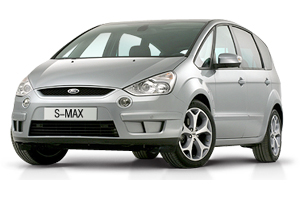
Ford S-Max (2006) review

Most MPVs, multi-purpose vehicles, big, medium or small by their very nature are not the most stylish of vehicles, Renault’s Grand Espace being the exception.

The designers concentrate on getting the maximum amount of seats and load space in a given length. The vehicles tend to be tall, unsporting in looks, barges to drive as well making them difficult to get into height restricted car parks and typical modern house garages.
Most are very well equipped to meet the needs of up to seven passengers but the driveability of them is ‘efficiency’ rather than ‘sporting’. The other option for customers has been to buy a seven seat 4x4 instead of an MPV, or even a large estate, but there again the driveability is always compromised.

The Mercedes R-Class six-seater launched earlier was the first example of a totally new type of multi-seat sports vehicle which really looks ‘the business’ and drives as well as any passenger car. But it is very expensive and unlikely to be a volume seller in the mass market.
Ford’s clever answer was to launch a month ago the S-Max and to create the all-new and much larger Galaxy MPV. The new Galaxy will in the main continue to be used by companies and hotels, as executive business transport and by the hire and reward industry. Until the Galaxy comes back onto the market as a used vehicle in a few years time this vehicle is too expensive and still probably too large to be considered for family transport.

Roll out the five-door Ford S-Max. This is a slightly smaller version of the Galaxy with a lower roof, sleeker design with sporty front and rear ends. It can be ordered in five or seven seat configuration. It sits neatly in the much improved Ford range between the Mondeo and Galaxy and it is an optional choice MPV model from the smaller Focus based C-Max.
For its UK sales launch I wrote numerous amounts of news stories about the S-Max because it is being used by Ford to improve the overall image of their brand. It now suggests Ford can really make stylish vehicles rather than just functional mass production models.

I do not usually re-visit a new model so soon after its launch but the S-Max intrigued me. Is it really as good and desirable as my brief initial test drive suggested it was? In short it is.

Many people, even those without the need for seven seat vehicles, find an MPV a useful vehicle, it’s all about transporting what you need to carry whether at work or play. It is fair to say that many people are put off by owning an MPV, they want something more stylish and trendy and that is where the S-Max fits the bill. Although the main selling models have seven seats most people will only need to use five of them leaving the two smaller rear seats folded into the floor so creating a large load area. The good thing about the S-Max, unlike many other large MPVs, is that the middle and rear rows of seats can be folded away, they do not need to be taken out and stored in the garage. They are there with you all the time just in case you need them. Not so well thought out is the carpet covering to the rear seat backs that needs to be unclipped and folded out in panels to create a flat load floor. Not clever or very neat.

In addition the S-Max is stylish and no potential owner would be put off having one of them sitting on their driveway. It looks a much more classy and expensive vehicle that the £16,995 to £21,495 price tags suggest. True not all models are that well equipped and some will need the extra costs options to bring them up to luxury levels but overall it looks a smart user-friendly vehicle rather than a luxury van with windows.


The range is available with a choice of two petrol and three turbocharged diesel engines. For petrol buyers you can chose the 2.0-litre, 145PS unit or the 2.5-litre, turbocharged 220PS engine. Diesel customers have the choice of a 1.8-litre 125PS unit, 2.0-litre 130PS and the 2.0-litre 140PS. The latter is the choice unit for me as it gives performance to go with the sporting looks. Transmissions are either five or six speed manual units depending on the model chosen
Each engine option is available with LX, Zetec or Titanium trim and specification levels and probably the mid Zetec level will be the most popular. All models have air conditioning. The LX has electric front windows, Zetec and Titanium have rear electric windows as well together with alloy road wheels. Titanium models add a CD changer, automatic lights and wipers and the all important front and rear parking sensors. All models are well equipped with numerous airbags.
My test model was the S-Max 2.0 TDCi, 140PS variant with top of the range Titanium specification and a six-speed gearbox. Price, £21,495 which is pretty competitive. You can pay that for a well equipped saloon or estate that doesn’t have the style or versatility of the S-Max. It is the same price as the similarly ‘specced’ VW Touran and Toyota Verso MPVs but it is much bigger. However my vehicle had numerous extra cost options including the excellent and user friendly Ford navigation system and the panoramic glass sunroof so the total price package of the test car was £25,895, a bit steep.

The S-Max is an MPV for people who enjoy driving. It offers good feedback from the precise steering and it gives good grip during cornering. With only one or two passengers on-board, or all the family and luggage the suspension performs very well, not too hard, not too soft.
The driving position or though slightly elevated is not as high as in other MPVs. You feel part of the vehicle. Visibility is generally good although the front pillars do compromise vision at the front quarters. With the sloping front bonnet and overall length of the vehicle, parking sensors are a must.

The all important load space ranges from 285-litres with three rows of seats in place, 854- litres of space with the rear seats folded and five seats still useable up to 2,000-litres with the second and third rows folded down. Just as important is the fact that the load length with just the front two seats being used is two metres, long enough to sleep in if you so wish.
The 2.0-litre, direct injection turbodiesel engine is well known as a strong and flexible performer and it gives the right blend of relaxed high speed driving, good acceleration when needed, its responsive and flexible around town and its pretty frugal, 38.5mpg during my extended test period with the car.


MILESTONES:

Ford S-Max 2.0 TDCi Titanium.

Engine: 2.0-litre, four-cylinders, direct injection turbodiesel, 140bhp, 320Nm of torque from 2,000rpm

Performance: Top speed 120mph, 0-62mph 10.2 seconds, 42.8mpg (actual 38.5mpg)

CO2: 169g/km


For: Non MPV sporty styling, sharp handling, flexible roomy interior, refined, generally well priced.
Against: Third row of seats are cramped for adults and the clumsy fold out carpeting arrangement needed to create a flat and protected floor for the load area.


--

src: www.askaprice.com

Monday, 16 July 2007

Ford Focus (2005)


For sport compact buyers who prioritize handling over acceleration, the SVT Focus was hard to beat. Unfortunately, Ford has decided that SVT will only sell expensive, high-horsepower vehicles in the future, and the $20,000 170-horsepower SVT Focus didn’t fit. The 2004 will be the last model year, and it has already come to an end.

But all is not lost. For 2005 Ford has mildly freshened the Focus. The largest change is a new instrument panel. To fill the SVT’s shoes a new ST trim will be offered. Initially at least the ST will only be available in four-door sedan form, perhaps to prevent buyer’s remorse on the part of those who bought an SVT, which was only available as a hatch with three or five doors.

Why is there risk of remorse? Well, the ST adopts the SVT’s suspension tuning, includes similar well-bolstered seats, adds a torqier (though lower horsepower) engine, and, best of all, carries a lower price tag.

This seems like a winning formula. But the ST faces some tough competition from the Mazda3, Mitsubishi Lancer Ralliart, and (perhaps) the soon to appear Toyota Corolla XRS. I haven’t driven the Toyota yet, but to get an idea of how the ST compares to the other two I took one for a test drive.


Styling

For 2005 the Focus’ front end has been mildly restyled. The new lamps and grille are a bit squarer and more upright. The old front end’s greater rake didn’t mesh well with the styling of the sedan or wagon, so for those bodystyles this is an especially welcome change.

With either front end, the sedan is a much less interesting, much less special design than the hatches. It’s not a bad looking car, but with its slab sides and blocky rear looks much more suited to a rental car fleet. The ST comes with 16-inch alloys that do not look as good on the car as even the 16s in previous years, much less the very nice thin-spoked 17s standard on the SVT. People who bought an SVT based substantially on its looks will feel no remorse in this department.

Among competitors, the Lancer has an even stronger econobox appearance, while the 3 looks considerably more upscale even with its overly abrupt trunk.

Inside the Ford Focus ST, nice touches include red-stitched black leather on the steering wheel and shift knob. The standard seats resemble those in the SVT, with red dots on charcoal in their inserts and in the door panels. Unlike the SVT, the bolsters are upholstered in cloth, not leather. These seats are tastefully sporty, unlike the garish orange units in the first-year Sentra SE. The car I drove had the optional charcoal leather with gray suede in place of the red-dotted cloth. Very nice.

If only the new instrument panel measured up to the seats and steering wheel. It will please those for whom the old asymmetrical design was too weird. But most people will find its extremely plain design boring. Hard plastics are used both on the instrument panel and doors. Though the Mazda3’s interior also makes extensive use of hard plastic, it looks much more upscale. The Lancer fares a bit better than the Focus in the interior materials department, but not by enough to count.


Accommodations

No matter how many times I test drive a Focus its driving position seems unusual. You sit a few inches higher than average in this car. While this affords an excellent view over the instrument panel, it detracts from the sportiness of the car. The driving positions in the other two cars are more conventional--the top of their instrument panels is much nearer the driver's line of sight--with the 3’s the sportiest of the bunch.

Many reviewers have found the Ford Focus’ seats uncomfortable. I’ve never had a problem with them though. The ST’s feel firmer than I recall from the last SVT I sat in (though they might be unchanged--the owner of that SVT was on the heavy side). As in the Lancer, firm side bolsters provide very good lateral support. The 3’s seats do less well here, though better than those in the Protegй that preceded it.

The Focus ST like every 2005 Focus has a single, difficult to reach manual control on the front face of the cushion that simultaneously changes the seat's height and tilt (rearward tilt is greatest with the seat in its lowest position). I prefer the separate controls for front and rear height in my Protege5, which allow tilt and height to be separately adjusted. But the Protйgй is no longer available. The 3 has only a single control for height. I cannot recall if the Lancer’s height adjustment used one knob or two. A Hyundai Accent provides separate controls, though, so it's clearly not a budget-busting feature.

The Focus’ front seat has limited rearward travel, such that I positioned it all the way back despite being only 5-9. I do like to drive with the seat further back than most people my height, but those over six feet might wish for more rearward travel.

The Ford Focus’ rear seat remains very comfortable for a compact. Knee room is a bit tight with the front seat all the way back, but the cushion is well off the floor, providing very good thigh support and minimizing the need for said knee room.

The sedan’s trunk is tall and deep, but on the narrow side, especially with the Audiophile package's subwoofer filling considerable space on the left. The seatbacks fold in two sections. Sadly, the cushion tilts as a single piece, so if you want a flat load floor you cannot carry even one person in the rear seat.

Interior storage is decent. The compartment in the insufficiently padded center armrest is small, but it is supplemented by another in the dash to the left of the steering column that can hold a dozen or so CDs.


On the Road

I’ve been impressed by the smoothness of the 160-horsepower 2.3-liter in Mazda’s cars, but not with its verve. Oddly, the 145-horsepower version in the Ford Ford ST feels punchier at lower revs despite lacking the Mazdas’ variable valve timing. The specs back up my impressions. The Mazda version produces its peak torque of 150 foot-pounds at 4500 RPM, while the Ford version produces 149 at 4250. Horsepower peaks are even more telling: 5750 vs. 6500 RPM.

The exhaust is louder in the Ford, which lends the engine a sportier character and make it feel spunkier than it is. Thankfully it’s not loud enough to be obnoxious, unlike that in the turbo Neon, but some might find its droning while cruising down the road a bit unwelcome. I didn't mind it. All in all I actually prefer Ford’s less powerful version of the 2.3, though I like the 2.4 in the Lancer better than either.

As for the SVT’s 2.0, I didn’t miss its extra 25 horses. Produced at 7000 RPM, they’d come in handy in ten-tenths driving, but for anything less the torquier 2.3 (149 foot-pounds at 4250 RPM vs. 145 at 5500) works better.

In one area the 2.3 is clearly superior to the SVT powerplant: premium fuel is not necessary.

The Ford Focus ST is available only with a five-speed manual. The SVT’s complicated, dual final drive six-speed no doubt cost much more, and in all honesty the extra ratio is not much needed with the torquier 2.3. Shifters have never been a Focus strong point, and this hasn’t changed for 2005. Shifts are easy enough, with a mild notchiness going into gear that I like but others might not. But shift throws are far too long and feel in the vicinity of neutral too sloppy (we’re clearly working through cables here), especially compared to the excellent short-throw shifter in the Ralliart. The 3’s shifter feels better than the Focus’, and those who find shift effort in the Lancer too high (I don’t) will find it the best of the three.

Traction control is standard on the ST, amazing since it’s not even available on the 3 and Lancer and was included in the seat heater package on the SVT. Although the engine is hardly torquey enough to make this feature of much use on dry roads, it could come in handy on slick surfaces.

In contrast to the shifter, handling has always been a Focus strong point, especially with the SVT, and the ST does not disappoint in this area. Although the steering wheel’s rim is a hair too thick, the system’s feel and weighting are very good both on center and in hard turns. The car goes precisely where you point it, with less understeer than the typical front-driver. The 3 and Lancer also handle very well, though, and lean less in turns. The Lancer’s steering, with a very direct feel on center, is in my opinion the best of the three. Between the Focus and 3 it’s hard to say which is the better handler. The Ford Focus has a more playful feel, and its steering is more communicative, while the 3 feels more taut and controlled. My Protege5 feels more nimble than any of them, with an almost go-kart feel. But that’s a relic of the past. Just about every compact strives to feel larger than it is these days.

The payoff for the ST’s extra lean in turns is the best ride quality of the bunch. In my first drive of the SVT, with similar suspension tuning, I found the ride overly harsh. Maybe it was the particular road I traveled, or that car's tires were overinflated, or the ST’s slightly higher profile (50- vs. 45-series) Pirelli P6 tires absorb the small stuff better. Whatever the reason, I found the ST’s ride almost cushy compared to that of the 3 and Lancer (though neither of those seemed harsh to me).

Wind noise levels are subdued, but even at moderate speeds exhaust and tire noises intrude somewhat. Thankfully even with five rather than the SVT’s six speeds the engine turns only about 2450 RPM at 60, which bodes well for both fuel economy and comfort on the highway.

I liked driving the Focus ST very much, yet find myself writing a mixed review. Just a sign of how tough the competition is in this segment.


Ford Focus ST Price Comparisons and Pricing

The Focus ST starts at $18,250. The car I drove included every option except the $350 side airbags: the $695 leather/suede seats, $115 heaters for said seats (a very low price), $455 Audiophile system with in-dash CD changer and subwoofer, $625 moonroof, and $125 alarm system. The total: $20,265.

How much cheaper is this than the 2004 SVT? The base price of the SVT is $900 higher. With sunroof and Audiophile package it lists for $21,145, or $1,435 more than the above ST. (Add heated seats to both and the gap widens by another $280 because traction control is standard on the ST but not on the SVT. On the other hand, the SVT has standard cloth/leather seats, so arguably the suede/leather option should be included in the ST's price.) Sticker to sticker the ST is the better deal.


Last Words

In most aspects the ST really is an SVT for about $1,500 less. It’s just about as much fun to drive, and as a bonus runs on regular. On the downside it is only available in relatively boring sedan form and between this and the smaller wheels doesn't look as sharp or special.

I found many things to like about the ST, most notably its engine, seats, and handling. But while the Mazda3’s engine doesn’t seem as energetic, it handles corners with less lean and looks much more upscale. For most people the Mazda is the one to buy.

For some, though, the Mitsubishi will be the surprising favorite. It has the most enjoyable engine and its steering and shifter feel fantastic. Shame about the styling, even more rental-car-like than the Focus sedan’s, but those who prioritize the driving experience will often prefer it to the others.

The Ford Focus ST’s best bet, as good as it is, is a larger rebate down the road. Making the ST available in hatch form with the SVT’s wheels also wouldn’t hurt, but it might upset SVT owners.
---
src: http://www.epinions.com/